



Buying a New Home? Here’s What to Check in the HVAC System First
You just signed the papers on your dream home, excited-until winter arrives and your furnace breaks down, leaving you cold and facing a $5,000 repair bill. As per Energy Star data, HVAC issues plague one in three new buyers. Don’t let that be you. We’ll guide you through inspecting key components like the furnace, AC unit, ducts, and thermostat, plus prep tips for spotting leaks, rust, and efficiency red flags before it’s too late.
Why HVAC Matters for New Homeowners
A reliable HVAC system keeps your new home comfortable year-round, reduces allergens by up to 50% with proper filtration per EPA studies, and boosts property value by 5-7% according to the National Association of Realtors.
EPA data shows that modern HVAC systems can improve indoor air quality by removing up to 99% of airborne pollutants, which results in fewer respiratory issues.
You’ll reap three key benefits:
- First, superior comfort in extreme weather-install heat pumps for variable climates to maintain steady 72 degreesF temperatures and avoid hot spots through zoned airflow controls.
- Second, better health via improved IAQ; HEPA filters trap dust and allergens, reducing asthma triggers by 40-60% as noted in American Lung Association studies.
- Third, long-term savings-choose SEER 16+ units to slash energy bills by 20%, per Department of Energy estimates.
Potential Costs of Ignoring HVAC Issues
Ignoring HVAC red flags during home buying could cost you $5,000-$15,000 in emergency furnace replacements, as seen in a 2022 Consumer Reports survey where 30% of buyers faced unexpected repairs.
Key challenges include:
- Steep repair bills, like a $1,200 blower motor replacement;
- Energy spikes, with inefficient AFUE 80% furnaces raising bills by 20% annually per ENERGY STAR data;
- Health risks from mold growth, often requiring $2,000 in remediation;
- Resale impacts, where undisclosed issues void warranties and deter buyers.
In one Florida case, a buyer shelled out $8,000 post-closing for AC failure.
Mitigate by negotiating inspection contingencies and seller credits during offers.
Understanding Key HVAC Components
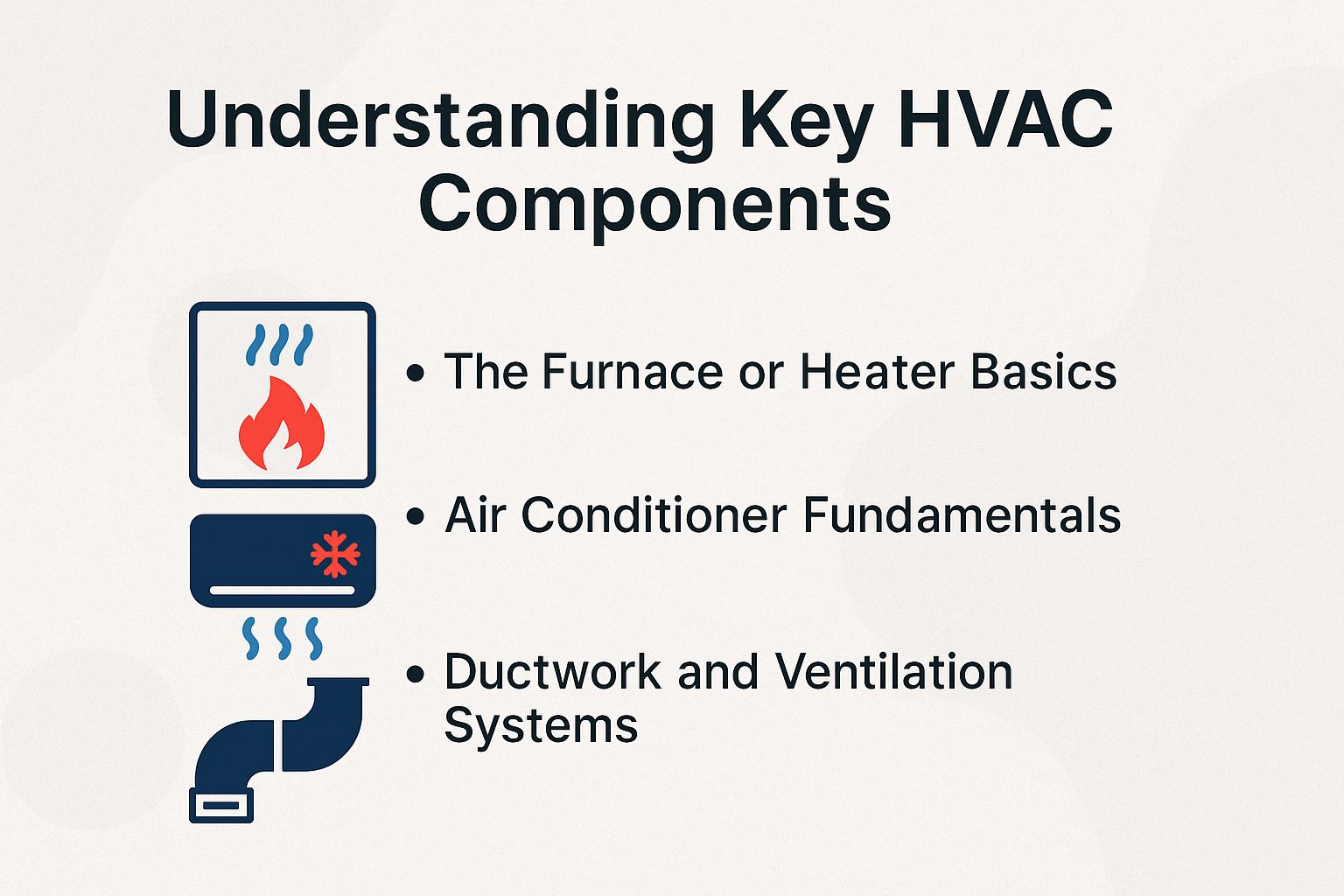
Grasping your home’s HVAC basics helps you spot issues early, like distinguishing a gas furnace from a heat pump-one of the 4 main types of HVAC systems-that could save 30% on heating costs per ENERGY STAR ratings.
The Furnace or Heater Basics
Your furnace, whether gas-fired or electric, powers winter warmth via forced air or hydronic systems, with modern AFUE ratings above 95% cutting fuel use by 20% compared to 80% models from the 1990s.
Among the main types, gas furnaces dominate in Midwest homes, where checking for 95%+ AFUE ensures energy savings-models like Carrier’s Infinity series achieve 98.5%, per ENERGY STAR ratings.
Boilers, common in older East Coast residences, deliver hydronic radiant heat; inspect for leaks using a simple pressure test kit to avoid inefficiency, as recommended by the American Society of Heating, Refrigerating and Air-Conditioning Engineers (ASHRAE).
Heat pumps suit mild California climates, with SEER 14+ for reverse-cycle efficiency-think Trane’s XV20i at 20 SEER.
Visualize systems with a basic sketch: draw fuel source combustion chamber distribution lines.
Calculate personalized AFUE savings via the EPA’s free online tool at energy.gov/energysaver.
Air Conditioner Fundamentals
Central air conditioners cool your home by circulating refrigerant through coils, with high-SEER units (16+) reducing summer bills by $200 annually based on EIA data for a 2,000 sq ft home.
To maintain efficiency, focus on these four essentials.
- Check the compressor, the main part of the system, for unusual noises like grinding, which could signal failure. A tune-up costs $100 to $200.
- the indoor evaporator coil can accumulate mold if dirty, reducing airflow by 20%; clean annually with a coil brush.
- Keep 2 feet of space between the outdoor condenser and any debris to allow proper heat release.
- check refrigerant levels-R-410A is standard; low levels drop efficiency by 10%, per ENERGY STAR guidelines.
For systems, split units suit multi-story homes, while packaged ones fit single-level.
Test performance: It should cool 3-5 degrees in 15 minutes on a 90 degreesF day.
Ductwork and Ventilation Systems
Ducts carry conditioned air through a home, but leaks can cause 20-30% of the energy to go to waste. A 2019 Oak Ridge National Lab study on U.S. homes found this.
Inspect key components to identify issues. Supply and return ducts, available as flexible (easy to maneuver but sag-prone) or rigid (durable, straight paths), often develop dents or loose seams-visually scan basements or attics for these.
Vents and registers allow adjustable zoning. Keep them fully open with no blockages for even air flow.
To get better ventilation, install energy recovery ventilators (ERVs). These units swap stale indoor air with fresh outdoor air and reduce humidity by up to 15%, according to EPA guidelines.
To detect leaks actionably, perform a smoke pencil test at joints: hold the device near seams and watch for wisps indicating airflow escape, or simply feel for drafts.
Best practice: Seal leaks with durable mastic compound, not foil tape, which fails over time and ensures long-term energy savings.
Preparing for Your HVAC Inspection
Proper prep for your HVAC inspection uncovers hidden issues, helping you negotiate savings based on accurate HVAC replacement costs-potentially up to $3,000, per a 2023 HomeAdvisor report on buyer due diligence.
Gathering Home History and Records
Request the seller’s HVAC service records from the last 5 years to verify tune-ups, as incomplete history flags 40% higher failure risk according to ACCA research.
Follow these steps to thoroughly assess the HVAC system:
- Ask your real estate agent for disclosure forms, scrutinizing them for details on past repairs or replacements.
- Review the unit’s manual to note the model and age; for instance, Trane systems often carry 10-year warranties, while Carrier offers up to 12 years on premium models.
- Contact previous owners through the agent to obtain service logs, ensuring no gaps in maintenance.
- Check for digital records using apps like ServiceTitan or HVAC-specific platforms if the seller used professional services.
This process typically takes 1-2 hours and avoids relying on verbal claims, per NATE guidelines.
Scheduling a Professional Walkthrough
Hire a certified HVAC inspector through ASHI for a $300-500 walkthrough, which identifies 80% more issues than DIY per InterNACHI studies.
To maximize value, follow these preparation steps:
- Ask your real estate agent for referrals to NATE-certified professionals who know local climate problems.
- Schedule the inspection pre-offer or as a contingency clause, ideally 1-2 weeks before closing to allow fixes without delaying the deal.
- Prepare targeted questions, such as the system’s AFUE (heating efficiency) or SEER (cooling rating) ratings, to gauge energy costs-aim for 95%+ AFUE in cold regions.
- Budget $150 extra for add-ons like duct leakage testing, which uncovers 20-30% hidden inefficiencies per EPA data.
The on-site walkthrough takes 30-60 minutes; avoid skipping it, a common mistake, as it prevents post-purchase surprises like $5,000 repairs.
Visual Inspection of the Furnace

A close visual check of your furnace reveals wear that could lead to $1,000+ breakdowns, with units over 15 years old failing 2x faster per FurnaceCompare data.
Checking Age and Model Number
Locate the furnace’s serial number on the nameplate-units from 2005 or earlier have 50% shorter remaining life, averaging 18 years total per AHRI stats.
Once found, decode the serial number to determine the manufacturing date-brands vary in format. For Carrier units, the first four digits represent YYMM (e.g., 1205 means December 2005).
Goodman often uses the first four as MMYY. Use a flashlight and phone app to photograph the plate for clarity.
Follow these steps:
- Access the panel: Remove the side or front cover safely.
- Note the full serial: Cross-check on AHRI’s directory at ahri.org for exact specs.
- Estimate age: Gas furnaces last 15-20 years; e.g., a 2010 Goodman GMVC96 model has about 10 years warranty and 8-13 years left per AHRI data.
- Assess replacement: If over 15 years, plan upgrades for efficiency gains up to 20% per DOE studies.
Inspecting for Rust, Cracks, or Leaks
Rust on your furnace heat exchanger signals carbon monoxide risks, affecting 1 in 5 older units and prompting immediate $2,500 replacement per CPSC warnings.
Beyond rust, which indicates moisture exposure-test it with an inexpensive moisture meter under $20-inspect for two other critical issues.
Cracks in the heat exchanger pose flame rollout dangers, potentially causing fires; shine a flashlight inside the combustion chamber to spot them, as highlighted in the 2018 Ruud furnace recall by the CPSC affecting over 60,000 units.
Leaks appear as oil spots near the blower motor. Also, check for soot buildup, a major red flag for incomplete combustion.
For safety, call a professional HVAC technician for a full combustion analysis rather than attempting DIY fixes, ensuring compliance with local building codes.
Verifying Burner and Ignition Operation
Check that your furnace’s hot surface igniter glows orange without flickering. Faulty igniters lead to 25% of service calls and $300 fixes, based on Bryant data.
To diagnose it, follow these steps safely:
- Turn the thermostat to heat mode and set it above room temperature.
- Access the burner compartment safely (power off first if unsure).
- Watch through the inspection port as the furnace cycles on-the igniter should heat to orange in 3-5 seconds without pulsing.
- If flickering occurs, shut off gas and power immediately. Use a multimeter to test resistance (40-100 ohms indicates good; infinite means replace).
Unlike older standing pilots that rely on flame, hot surface igniters in modern gas furnaces (post-1990s) are silicon carbide and last 3-5 years with proper care, per U.S. Department of Energy guidelines.
Replacement parts cost $20-50; DIY if experienced, or call a pro to avoid voiding warranties.
Evaluating the Air Conditioning Unit
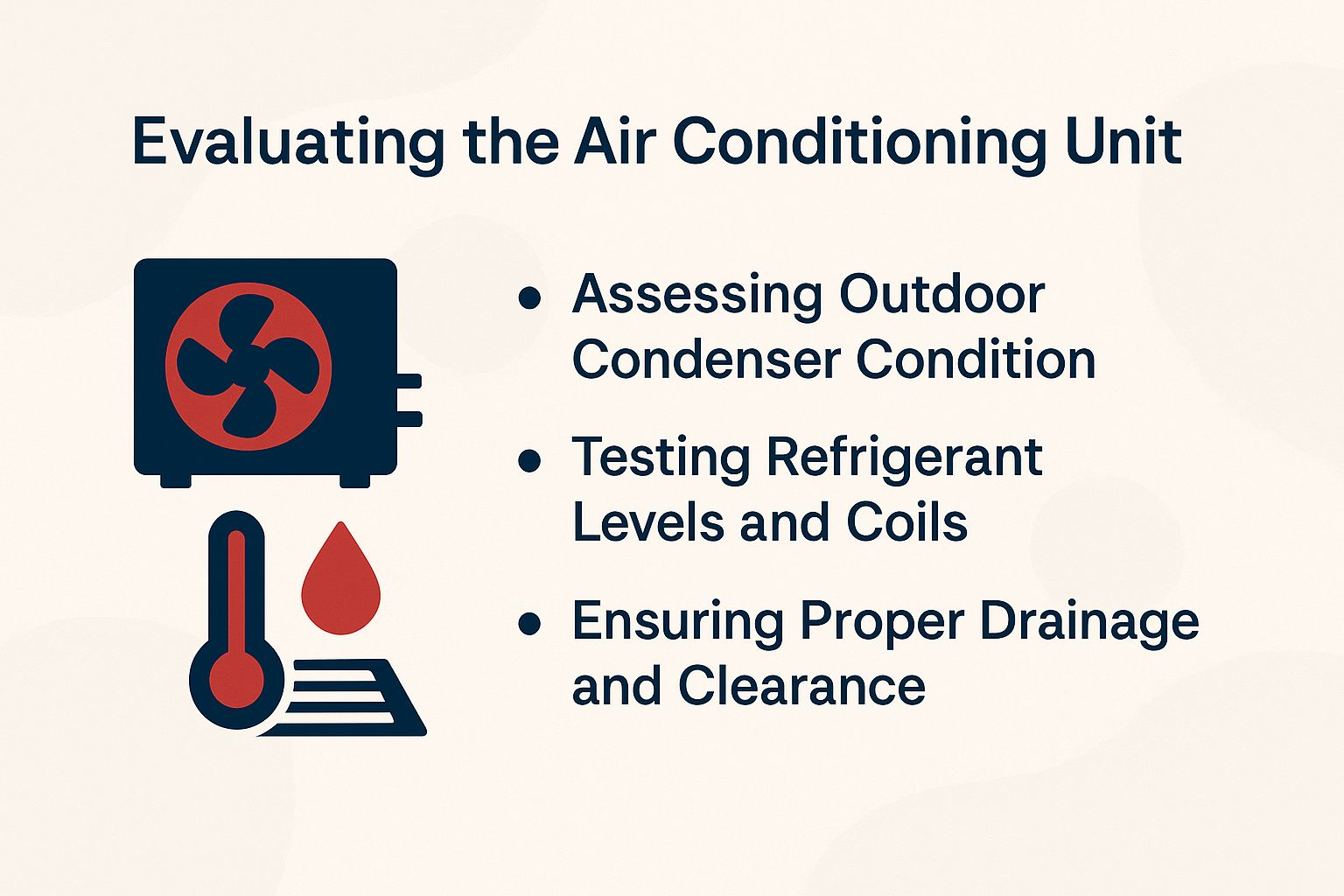
Your AC unit’s evaluation prevents $4,000 compressor failures, with 70% of issues stemming from neglected outdoor condensers per a 2021 ASHRAE report.
Assessing Outdoor Condenser Condition
Check the condenser fan for bent fins or debris, as clogged units reduce efficiency by 15% and overheat compressors in 1 in 3 homes per Lennox studies.
To maintain optimal performance, follow these steps during your seasonal inspection:
- Power off the unit at the breaker for safety.
- Clear debris using a soft brush or compressed air (avoid high pressure to prevent fin damage); aim for at least 2 feet of clearance around the unit per ENERGY STAR guidelines.
- Inspect and straighten bent fins with a $10 fin comb tool-gently run it along the coils for the Trane XR17 or similar models.
- Test the fan by listening for smooth operation (under 70dB) and checking for wobbles; red flags include unusual vibrations or oil leaks, which affect 20% of older units per DOE reports.
This routine can extend compressor life by up to 5 years.
Testing Refrigerant Levels and Coils
Low refrigerant in your AC coils drops cooling by 20%, often from leaks that require $200-500 recharges, as detected in EPA’s 2020 home audit samples.
To diagnose low levels yourself, follow these actionable tests before calling a pro.
- First, feel the lines: the suction line should be cold and sweaty, while the liquid line feels warm-if not, suspect low charge.
- Second, inspect the evaporator coil for frost buildup, a clear sign of insufficient refrigerant.
- Third, rent a gauge set ($50 at home centers) to measure pressures accurately; low readings confirm the issue per ASHRAE standards.
Check for dirty coils, which can mimic symptoms and raise bills by 5%-clean with a coil brush.
Note: Post-2020 systems use R-410A refrigerant only, per EPA regulations.
Ensuring Proper Drainage and Clearance
Clogged AC drain lines cause water damage in 15% of systems, leading to $1,000 mold cleanups, per Insurance Institute for Business & Home Safety data.
To prevent this, perform regular maintenance using these actionable steps.
- First, locate the condensate line-a white PVC pipe near your indoor unit.
- Second, test flow by pouring a gallon of water into the drain pan; it should drain freely within seconds.
- Third, clear clogs with a wet/dry vacuum ($30 at home centers), sucking from the outdoor end while wearing gloves.
- Fourth, check that the slope is 1/4 inch per foot for good drainage. Adjust it if necessary.
For best results, install a P-trap to block sewer gases, as recommended by the EPA. Adding a secondary drain pan catches overflows, averting floods in 90% of cases per HVAC studies.
Inspecting Ductwork and Vents
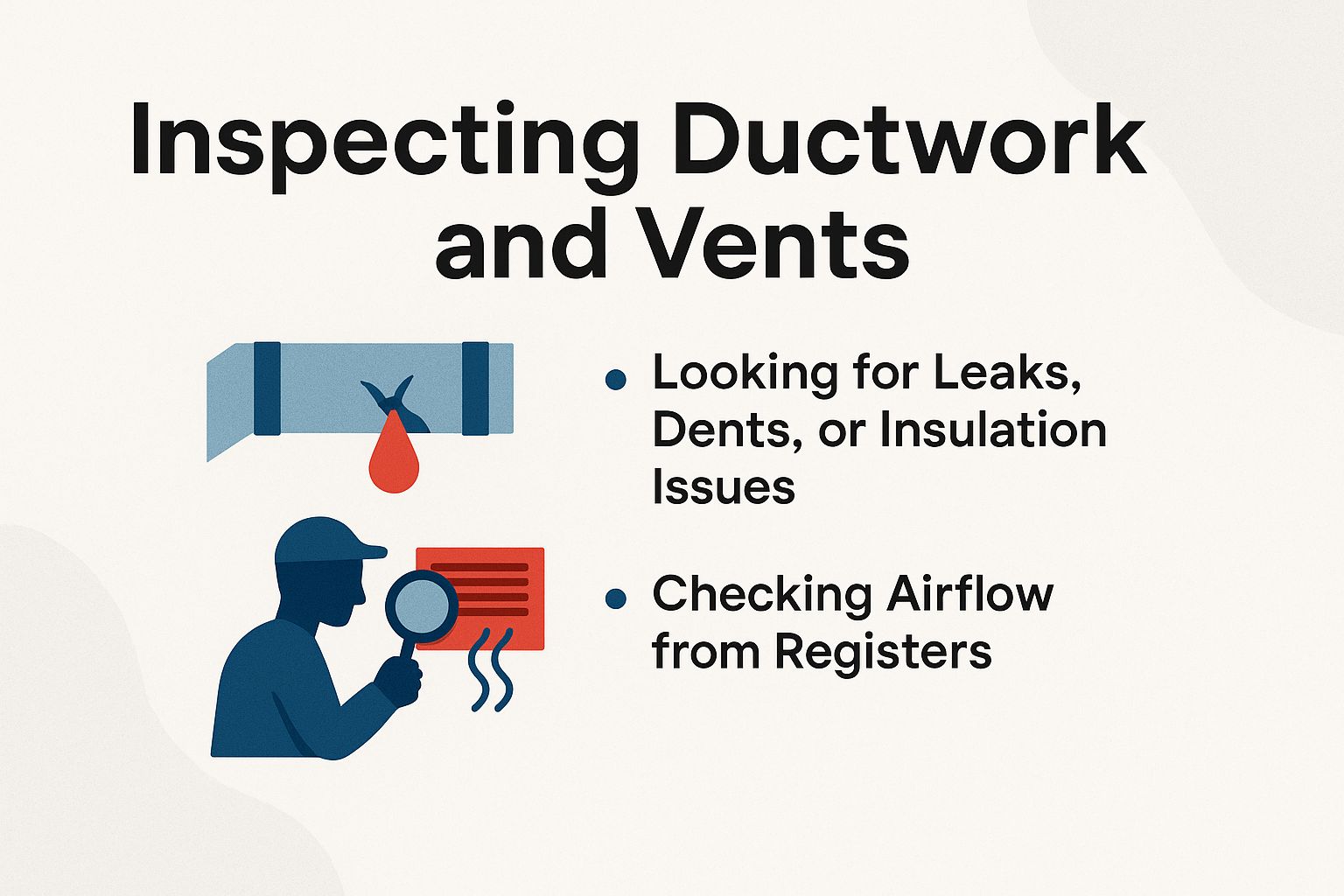
Duct inspections fix airflow problems that unevenly heat/cool rooms, wasting 30% energy in leaky systems according to a DOE field study on 1,000 homes.
Looking for Leaks, Dents, or Insulation Issues
Exposed duct leaks in attics or basements lose 20% of heated air, detectable with a $15 smoke test kit as recommended by Energy Star.
- To address common issues, start by inspecting for leaks: feel for air escaping at seams and seal them immediately with UL-181-rated foil tape, preventing up to 15% further loss per a Lawrence Berkeley National Laboratory study.
- Next, check for dents that can restrict airflow by 10-20%; straighten them using a duct repair tool like the Klein Tools brush set ($25).
- Insulate ducts with fiberglass wraps that provide at least an R-8 rating. Without this, ducts in unconditioned crawl spaces lose 25% of energy, based on U.S. Department of Energy data.
- For thorough diagnosis, hire a professional for a $200 duct pressure test to quantify total inefficiencies.
Checking Airflow from Registers
Balanced airflow from vents should deliver 400 CFM per ton of AC, preventing hot spots that affect 40% of homes per a 2022 ACCA survey.
- To achieve this, start by measuring airflow with an affordable anemometer ($25 on Amazon) or a simple tissue test: hold a tissue near vents to detect velocity (aim for 10-15 ft throw). Remove vent covers and clean grilles to eliminate blockages, a common issue in 30% of systems per ENERGY STAR guidelines.
- Next, go to the duct dampers in the attic or basement and make small changes to them-open any that are partly closed to increase airflow in weak spots, and restrict overactive vents.
- For example, a closed supply damper can cause 20% flow variance, leading to cold spots; recalibrating evens it out. Re-test after adjustments for optimal distribution.
Reviewing Thermostat and Controls
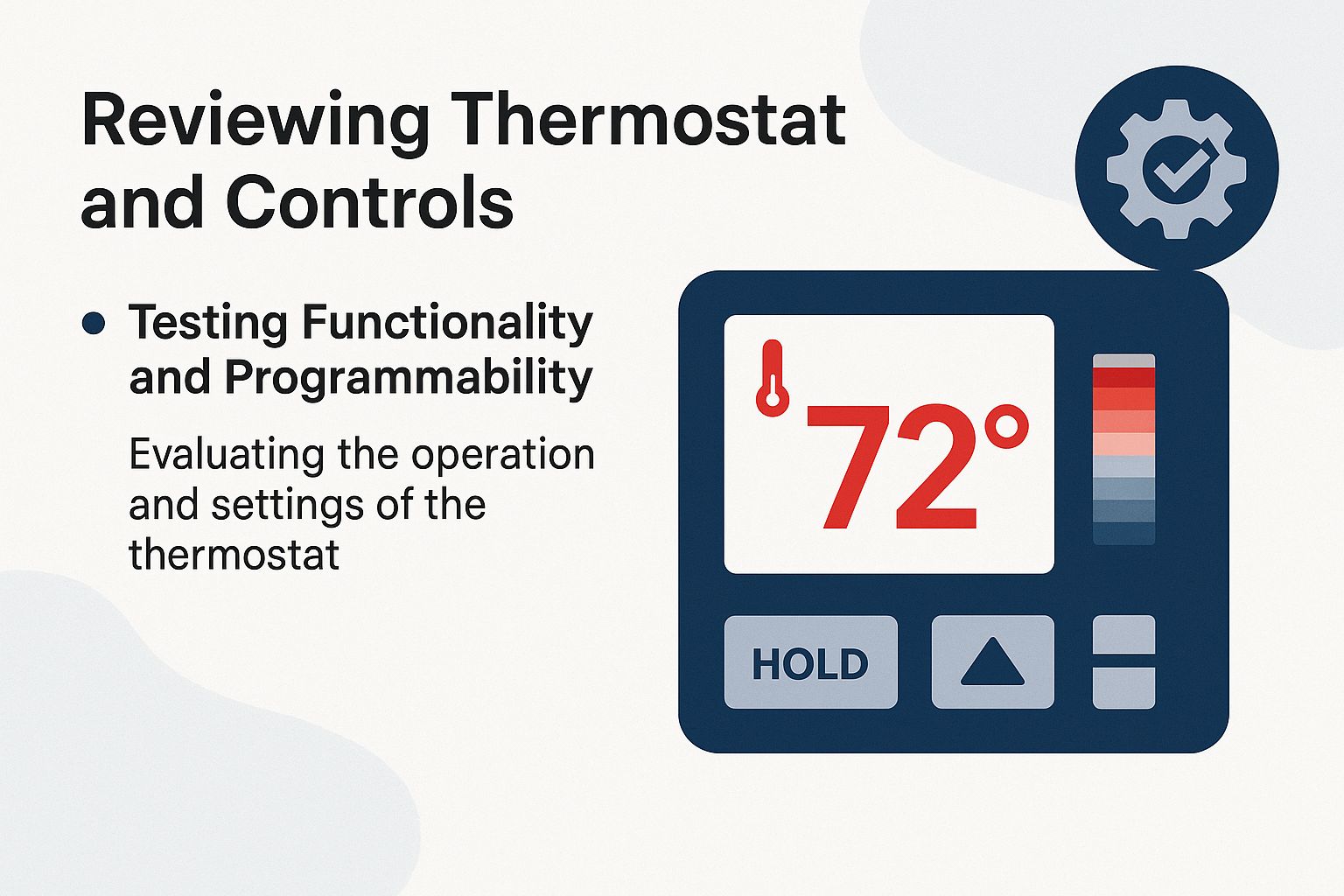
A faulty thermostat can increase bills by 10%. Replacing it with a Nest thermostat saves $130 a year through programmed schedules, according to Google studies.
Testing Functionality and Programmability
Test your thermostat by setting it to 78 degreesF in summer; it should cycle the AC within 2 minutes, avoiding short-cycling that wears compressors 2x faster per Honeywell data.
If it doesn’t work, fix problems one step at a time.
- First, check batteries-replace AA types if voltage is below 1.5V per manufacturer specs to prevent erratic readings.
- Next, cycle between heat and cool modes; listen for relay clicks confirming operation, as advised by the EPA’s energy guidelines.
- Then, set a 7-day schedule using apps like Ecobee’s for accurate control. This can cut energy use by as much as 10%, based on DOE studies.
- Calibrate accuracy within +-1 degreesF using a digital thermometer.
When upgrading, compare basic non-programmable models ($50) to ones like the Nest E ($130) that connect to WiFi for remote control and automatic scheduling.
Assessing Air Quality and Filters

Poor HVAC filters contribute to 50% of indoor allergens, but MERV 13+ replacements improve IAQ by 60%, as shown in EPA’s 2018 residential study.
Examining Filter Condition and Replacement History
Inspect your HVAC filter slot for a MERV 8-13 pleated type; dirty ones restrict airflow 15% and should be swapped monthly in high-pollen areas per AAA foundation guidelines.
To replace effectively, follow these steps:
- Locate the filter in the return plenum (common size: 16x25x1 inches) by turning off your HVAC system and removing the access panel.
- Assess dirt level: hold the filter to light-if less than 50% is see-through, it’s clogged; compare fiberglass options ($5-10, basic capture) versus electrostatic ($15-25, better for allergens).
- Check replacement records: aim for annual swaps in standard homes, quarterly if pets are present.
- Upgrade to a HEPA filter ($20 extra) for severe allergies, as studies from the EPA show they trap 99.97% of particles. Seller logs often confirm compliance history, ensuring optimal efficiency.

About the Author
I’m Allen Chambers, a master electrician and licensed HVAC contractor with over 20 years of experience helping Florida homeowners design energy-efficient, high-performance HVAC solutions. As a contributor to HVAC Service Cost, I focus on making heating and cooling upgrades more affordable, sustainable, and stress-free for families across the state.
Leave a Reply